You move to Germany. You figure out the DB app, learn what Pfand means, crack the recycling system. But there’s one thing almost nobody tells you on arrival: the emergency number here is not 911.
In Germany, it’s 112 and 110 — and they do different things. One call to the wrong number in a panic costs you time you don’t have. Here’s what you need to know, once, before you ever need it.
1. The Short Answer — Save This Before You Read On
- 112 → Fire, ambulance, medical emergency. Anyone’s life is at risk.
- 110 → Police. A crime is happening, you’re being threatened, or there’s a serious public safety situation.
That’s the core. The rest fills in the gaps so you can act fast — and not freeze.
2. 112 — Medical, Fire, and Rescue
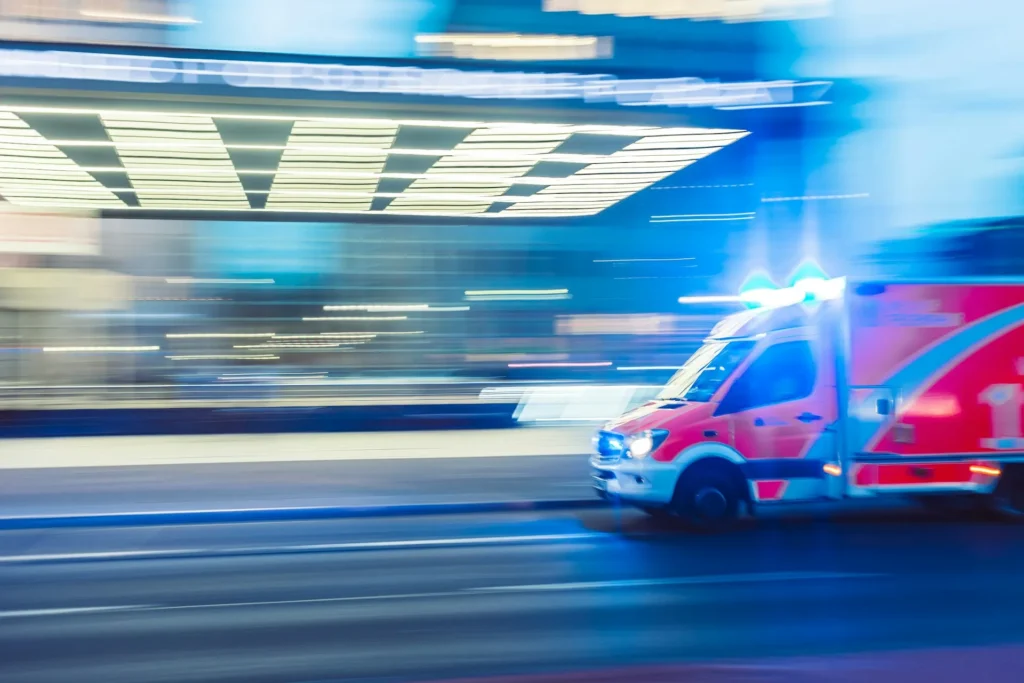
112 connects you to the Integrierte Leitstelle — Germany’s integrated emergency control centre — which dispatches ambulances, fire brigades, and rescue teams, all from one call. You don’t need to figure out who to call. Just dial 112.
Call 112 when someone is:
- Unconscious or not breathing
- Showing signs of a heart attack or stroke — face drooping, arm weakness, slurred speech
- Seriously injured after an accident or fall
- Choking
- Having a severe allergic reaction (anaphylaxis)
- In or near a fire, or trapped
Also call 112 for traffic accidents with injuries, a child in immediate danger, suspected poisoning or overdose, or any situation where you genuinely aren’t sure if someone’s life is at risk.
Three things about 112 that most newcomers don’t know:
First: it works from any phone. A locked phone. A phone with no SIM card or zero credit. Even in areas with no regular signal. It’s always free. This is a legal standard across every EU country — built directly into the GSM network.
Second: calling 112 dispatches both ambulance and fire if needed. You don’t need to make separate calls.
Third: do not hang up until the dispatcher tells you to. They will guide you through what to do while help is on the way.
3. 110 — The Police Line
110 connects you directly to the police. Use it when:
- A crime is in progress — break-in, robbery, assault, domestic violence
- You’re being threatened or followed
- You’ve witnessed a serious incident
- There’s a public safety situation that needs an immediate police response
Not sure whether you need police or ambulance? Call 112. The control centre coordinates both services and will send whoever is needed.
4. What to Actually Say When You Call
This is where people blank. You’re panicked, someone is hurt, and German isn’t your first language. Here’s what to do.
Say “English, please” first. Don’t wait, don’t apologise. English-speaking operators are standard at emergency centres, especially in cities. If the operator you reach doesn’t speak English, they can transfer you. Language should never be a reason not to call.
Then cover the five W’s — this is what German dispatchers are trained around. They’ll ask these questions anyway, but knowing them keeps you calm:
| German | English | What to say |
| Wo? | Where? | Exact address, floor, nearest landmark or major road |
| Was? | What happened? | Short and clear: “car accident,” “fire,” “someone collapsed” |
| Wie viele? | How many? | How many people are injured or affected |
| Wer? | Who is calling? | Your name and callback number |
| Warten | Wait | Stay on the line until you’re told to hang up |
If you don’t know the exact address, describe what you can see — the street name, a nearby shop, a tram stop, the building. If you’re calling from a mobile, the dispatcher may be able to locate you via GPS.
Stay on the line. Dispatchers often give first aid instructions while the ambulance is still en route. Following those instructions can be the difference.
5. The Other Numbers Worth Knowing
116117 — Non-emergency doctor line
Sick on a Sunday night? Fever that won’t break but doesn’t need an ambulance? This is the number. 116117 is Germany’s on-call doctor service (ärztlicher Bereitschaftsdienst) — it connects you to medical advice or arranges a home visit from an on-call doctor. Available 24/7, free, works nationwide without an area code.
One important note: the phone service is currently German-only. If you can’t manage in German, the website 116117.de has English guidance and can help you find a nearby on-call practice (Bereitschaftspraxis) to go to in person.
19222 — Non-emergency ambulance transport (Krankentransport)
This is for planned medical transport — getting to a hospital appointment when you physically cannot use public transport or a taxi for medical reasons. Your doctor can usually arrange this with a prescription for your health insurance. It is not for emergencies — for those, always call 112.
The nora app — If you can’t make a voice call
nora is the official emergency app of the German federal states, designed for people who cannot use voice calls — deaf or hard of hearing, speech impairments, or situations where speaking aloud is dangerous. It connects to 112 and 110 via text input and symbols, and automatically transmits your location to the control centre. Free on iOS and Android. Worth having.
6. Quick Reference
| Number | For | Free? | English? |
| 112 | Ambulance, fire, rescue — life-threatening | ✓ Always | ✓ Most operators |
| 110 | Police — crime in progress, threats | ✓ Always | ✓ Most operators |
| 116117 | Non-emergency on-call doctor | ✓ Always | Phone: German only |
| 19222 | Non-emergency ambulance transport | ✓ Always | Limited |
| nora app | Text-based emergency contact (no voice needed) | ✓ Free app | ✓ English interface |
7. Frequently Asked Questions
Can I call 112 if I only speak English?
Yes. Say “English, please” as the very first thing you say. English-speaking operators are the norm at major emergency centres. In very rural areas, English may be limited — but operators can transfer you or use simple instructions. Never let a language barrier stop you from calling.
Can I call 112 without credit or a SIM card?
Yes. 112 works from any mobile phone — locked, no SIM, no credit — and is always free. This is a legal requirement across all EU countries.
What if I’m deaf or can’t speak on the phone?
Download the nora app. It lets you reach 112 and 110 via text and symbols, with your location sent automatically. There is also the Tess relay service, which provides sign language interpretation during emergency calls.
Is 112 the same number across Europe?
Yes. 112 is the standard emergency number across all EU member states. It works wherever you are in Europe, even from a foreign SIM.
What if I call by accident?
Stay on the line and tell the operator it was an accidental call. Don’t hang up — an unexplained disconnected call can trigger a welfare check or callback dispatch.
Share this post: